Impact de la Gradation sur la Valeur
La gradation peut transformer la valeur d'une carte - mais pas toujours positivement. Ce guide explique les multiplicateurs typiques.
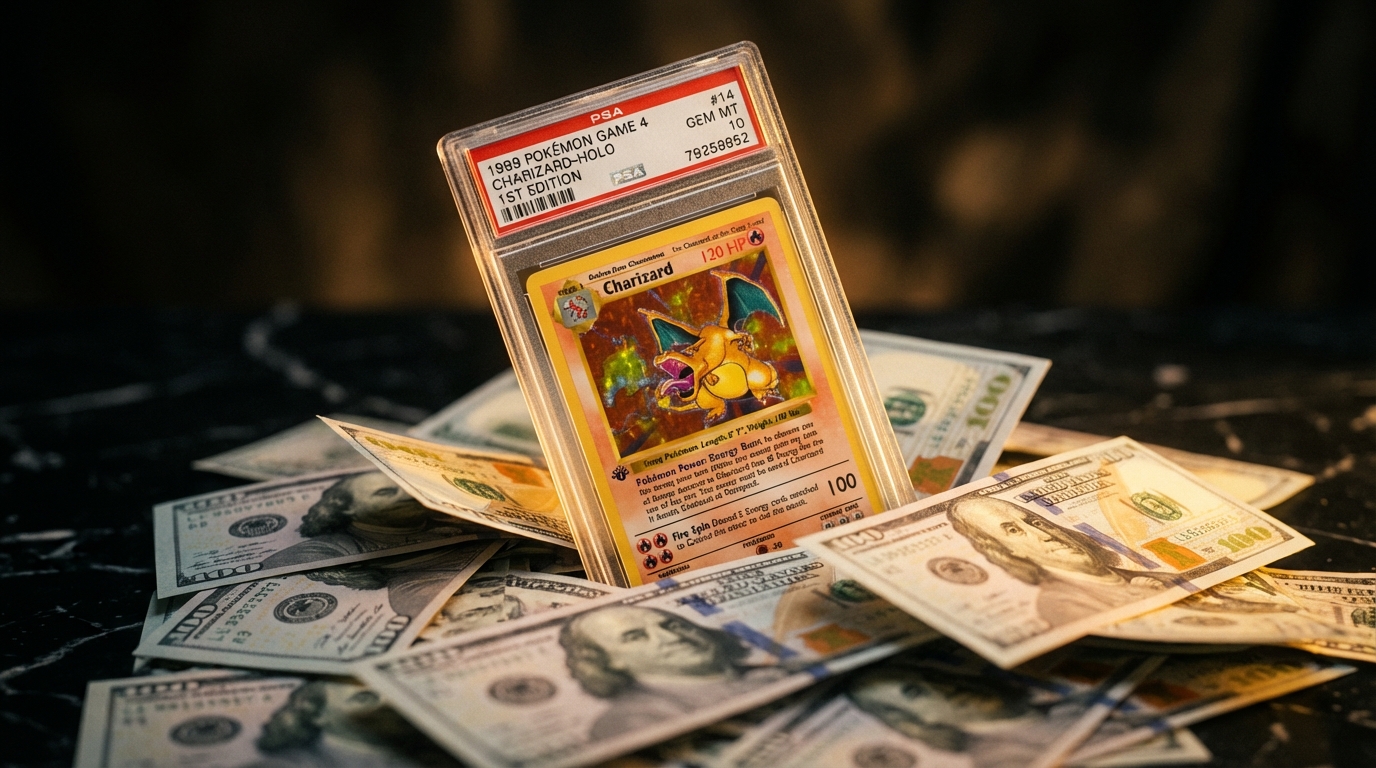
A raw Base Set Charizard might fetch $400. PSA 7? $800. PSA 9? $3,000. PSA 10? $15,000. The grade is everything.
The Grading Boom: How We Got Here
The Pokemon card grading phenomenon didn't happen overnight. For most of the hobby's first two decades, grading remained a niche practice. The 2020 pandemic changed everything. Stuck at home, people reconnected with childhood hobbies. YouTube videos of rare card openings went viral. Celebrity collectors like Logan Paul brought unprecedented attention to the market.
PSA, already the dominant grading company, was overwhelmed. Submission volumes increased from approximately 2 million cards in 2019 to over 7 million in 2020. By early 2021, PSA closed submissions entirely to clear backlogs, with turnaround times stretching beyond a year. This scarcity further fueled demand for already-graded cards.
The market has since stabilized, but grading remains fundamental to high-value Pokemon card transactions. Understanding the value impact of different grades is essential knowledge for serious collectors and investors.
Multiplicateurs par Grade
Le grade affecte dramatiquement la valeur de marché :
| Grade | Multiplier | Notes |
|---|---|---|
| PSA 10 | 3-10x | The holy grail for most cards. Vintage cards see higher multipliers (10x+). Modern cards with high pop reports see lower premiums (2-3x). |
| PSA 9 | 1.5-3x | The sweet spot for modern cards. Often the best risk-adjusted return since PSA 9 rates are higher than PSA 10. |
| PSA 8 | 1-1.5x | Often similar to raw NM pricing. Grading costs may exceed value increase for common cards. |
| PSA 7 and below | 0.5-1x | May actually be worth less than raw NM. Grading costs rarely make sense unless the card is extremely valuable. |
| BGS 10 Black Label | 5-20x | Extremely rare. Commands massive premiums on desirable cards. A BGS 10 Black Label Charizard can exceed PSA 10 prices significantly. |
| BGS 9.5 | 2-5x | Considered equivalent to PSA 10 by many collectors. Strong subgrades (10/9.5/9.5/9.5) command higher premiums. |
Les multiplicateurs varient. Les cartes vintage ont des primes plus élevées.
Break-Even Analysis: When Grading Makes Financial Sense
Grading isn't free. Between service fees, shipping, insurance, and time, costs add up quickly. Here's how to determine if grading makes financial sense for a specific card.
Total Grading Costs
- —PSA Economy: $25-30 per card + shipping ($15-30) + insurance (varies)
- —BGS Standard: $20-25 per card + shipping ($15-25) + insurance (varies)
- —CGC Economy: $15-20 per card + shipping ($10-20) + insurance (varies)
Realistic total cost per card: $40-75 depending on service and volume
The Break-Even Formula
For grading to make financial sense: Expected Graded Value - Raw Value > Total Grading CostsExample: A raw card worth $50 costs $50 to grade. If PSA 10 sells for $200 and you estimate 50% chance of PSA 10 (expected value: $100 for PSA 10, $60 for PSA 9), your expected graded value is approximately $80. Net gain: $80 - $50 (raw) - $50 (costs) = -$20. This submission loses money on average.
Quand Grader
Gradez Quand :
- ✓Carte vaut 50€+ brute
- ✓Apparence PSA 9-10
- ✓Vous comptez vendre
- ✓Carte vintage/recherchée
- ✓The card is vintage (1999-2003) where graded premiums are highest
- ✓Bulk submission economics work in your favor
Ne Gradez Pas Quand :
- ✗Carte vaut moins de 30€
- ✗Défauts visibles = PSA 8 ou moins
- ✗Carte moderne/remplaçable
- ✗Frais dépassent l'augmentation de valeur
- ✗Grading fees would exceed the value increase even at PSA 10
- ✗The card has sentimental value that a grade won't enhance
ROI Case Studies: Vintage vs Modern
Vintage Case Study: Base Set Blastoise
A raw NM Base Set Blastoise sells for approximately $150. PSA 9 sells for $450 (3x). PSA 10 sells for $3,500 (23x). At $60 total grading cost, even a PSA 9 generates $240 profit. A PSA 10 generates $3,290 profit. However, PSA 10 rates for vintage are typically 5-15%. The expected value calculation: (15% × $3,500) + (50% × $450) + (35% × $200) = $525 + $225 + $70 = $820. Expected profit: $820 - $150 - $60 = $610. Vintage grading often makes sense.
Modern Case Study: Alt Art Umbreon VMAX
A raw NM Alt Art Umbreon VMAX sells for approximately $250. PSA 10 sells for $450 (1.8x). PSA 9 sells for $280 (1.1x). At $60 total grading cost, a PSA 10 generates $140 profit, but PSA 9 generates only -$30 (a loss). Modern pull rates mean PSA 10 populations are high, suppressing premiums. If your PSA 10 rate is 40%: (40% × $450) + (60% × $280) = $180 + $168 = $348. Expected profit: $348 - $250 - $60 = $38. Marginal at best.
Population Reports: The Hidden Variable
Population reports track how many cards exist at each grade. They're available on PSA, BGS, and CGC websites. Understanding pop reports helps predict value premiums and identify opportunities.
Low population at high grades increases value. A PSA 10 with only 50 copies commands higher premiums than one with 5,000 copies. As more cards get graded, populations increase and premiums decrease. Early graders of modern sets often capture the highest returns.
Monitor pop reports for cards you're considering grading. A sudden population spike (from a large submission clearing) can decrease values. Conversely, low populations on desirable cards suggest strong grading ROI.
Market Timing Considerations
Pokemon card values fluctuate with broader market conditions, new releases, and cultural moments. Timing your grading submissions and sales can significantly impact returns.
- —New game releases often spike interest in related cards
- —Anniversary celebrations (25th Anniversary drove massive 2021 demand)
- —Celebrity involvement can cause temporary price spikes
- —Economic conditions affect collectibles markets
- —Grading backlogs affect when your cards return and market conditions upon sale
Calculer le ROI
Avant de soumettre, calculez votre retour potentiel :
ROI = (Valeur Gradée - Valeur Brute - Coûts) / (Valeur Brute + Coûts)Coûts Typiques de Gradation
- —PSA : 25-150€+
- —BGS : 20-100€+
- —CGC : 15-75€+
- —Bulk submissions (20+ cards) can reduce per-card costs by 20-30%
Conseils de Gradation
- —Auto-évaluez honnêtement avant soumission
- —Utilisez des sleeves et toploaders pour l'envoi
- —Considérez les soumissions groupées
- —Recherchez les ventes récentes
- —Incluez frais d'envoi et assurance
- —Keep records of raw purchase prices and grading costs for tax purposes
- —Build relationships with grading submission services for better rates
- —Diversify across grading companies to hedge market preferences
- —Review your cards under magnification before submission—what you miss, graders won't
Comparez Brut vs Gradé
Voyez la différence de prix entre versions brutes et gradées.
Vérifier les Valeurs→