Pokemon 30th Anniversary Collecting & Investment Guide
On February 27, 1996, Pokemon Red and Green launched on the Game Boy in Japan, igniting a cultural phenomenon that would span three decades and touch every corner of the globe. Now, in 2026, the Pokemon Trading Card Game celebrates its 30th anniversary — and history tells us this is the single most important year for collectors and investors in this generation. The 25th anniversary in 2021 saw PSA 10 Base Set cards surge 40-60% in value, sealed booster boxes triple overnight, and an entirely new wave of collectors flood the market. The 30th anniversary is poised to eclipse those numbers, with early 2026 data already showing unprecedented demand for anniversary-related products.
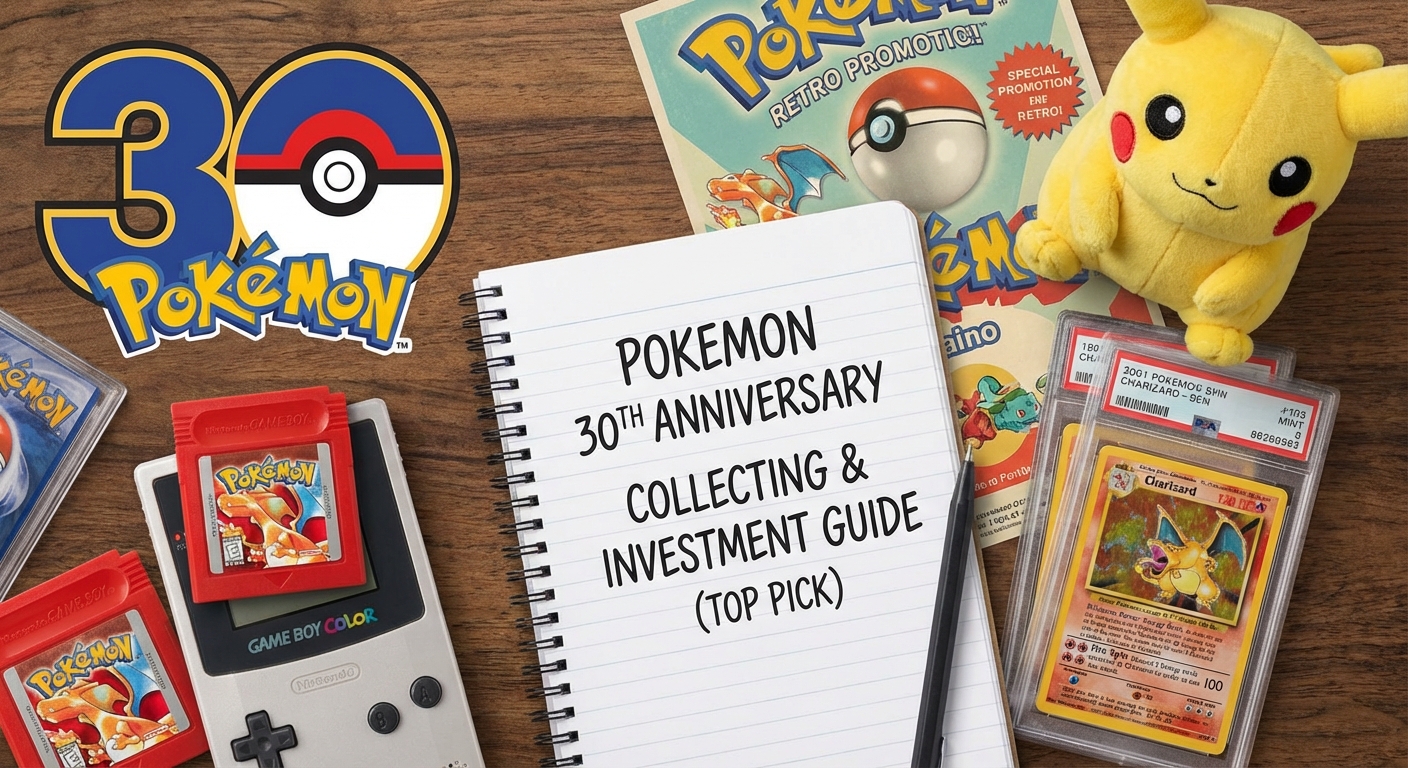
The 25th anniversary saw $420,000 Charizards and 300% sealed product gains. The 30th anniversary has even more momentum behind it.
The Road to 30 Years
When Media Factory printed the first Pokemon cards in October 1996, nobody predicted they would become the highest-grossing media franchise in history. Those initial Japanese Base Set cards — featuring 102 cards illustrated by artists like Mitsuhiro Arita and Ken Sugimori — were simple cardboard rectangles. Today, a PSA 10 First Edition Base Set Charizard commands north of $300,000 on the open market, and the global Pokemon TCG industry generates over $3.7 billion in annual revenue.
The journey from 1996 to 2026 spans over 100 main expansions, 15,000+ unique cards, and some of the most dramatic price swings in any collectible market. The early 2000s saw the initial boom and crash. The 2016 Pokemon GO renaissance brought millions of lapsed collectors back. The 2020-2021 pandemic era created a speculative frenzy that pushed prices to all-time highs. Through it all, one pattern has remained constant: anniversary years create outsized returns for prepared collectors.
The 30th anniversary arrives at a unique inflection point. The collector base has matured, grading infrastructure has expanded globally, and institutional interest from auction houses like Heritage and PWCC has legitimized Pokemon cards as an alternative asset class. Simultaneously, Gen Z collectors who grew up with the franchise are entering their peak earning years. This confluence of factors makes 2026 the most consequential year for Pokemon TCG collectors since the original Base Set launch.
Pokemon TCG Milestone Timeline
The Beginning — Japanese Base Set
Media Factory releases the first Pokemon TCG cards in Japan with 102 cards. The initial print run sells out within weeks, establishing a template for the collectible card game industry that persists to this day.
Western Expansion — English Base Set
Wizards of the Coast brings Pokemon TCG to North America and Europe. First Edition Base Set booster boxes retail for $143.64. Those same sealed boxes now command $300,000-$500,000 at auction. The Pokemon TCG becomes the fastest-growing product in the history of the toy industry.
Nintendo Takes Over Production
The Pokemon Company takes production rights from Wizards of the Coast. The EX series introduces a new era of card design with textured holofoils. Market prices for Wizards-era cards begin their long-term appreciation as supply becomes permanently fixed.
10th Anniversary — EX Holon Phantoms
The franchise marks its first major anniversary. Gold Star cards from this era — particularly Charizard, Mew, and Rayquaza — are now among the most valuable modern cards, with PSA 10s commanding $5,000-$25,000 each.
15th Anniversary — Black & White Era
Full Art cards debut, revolutionizing card aesthetics and creating a new tier of chase cards. The Black & White base set introduces Secret Rares that become highly sought after. Sealed product from this era has appreciated 400-600% since release.
20th Anniversary — Pokemon GO & Evolutions
Pokemon GO launches and reignites global interest in the franchise. The XY Evolutions set reprints original Base Set artwork, creating massive nostalgia-driven demand. Sealed booster boxes that retailed at $100 now sell for $800-$1,200. This year proves that anniversary nostalgia is the single most powerful price driver in the hobby.
The Pandemic Boom Begins
COVID-19 lockdowns, YouTube influencers like Logan Paul, and stimulus checks create a perfect storm. PSA submissions increase 300%. Base Set Charizard prices jump from $30,000 to $420,000 at peak. The modern Pokemon investment era officially begins.
25th Anniversary — Celebrations Set
The Pokemon Company releases the Celebrations set with reprints of 25 iconic cards including the original Base Set Charizard. Despite massive print runs, sealed product appreciates 150-200% within 18 months. The Gold Mew card becomes an instant icon. Total 25th anniversary merchandise generates over $1 billion in revenue.
Scarlet & Violet — The Illustration Rare Revolution
Special Illustration Rares become the most collected cards in the hobby's history. The Moonbreon (Umbreon VMAX Alt Art) reaches $800+ in raw condition. Pokemon TCG overtakes Magic: The Gathering in total market cap for the first time, cementing its position as the world's most valuable trading card brand.
30th Anniversary — The Biggest Year Yet
The Pokemon Company announces a year-long celebration with multiple special releases, reprints, and exclusive products. Early market data shows pre-order volumes 300% above 25th anniversary levels. Collector sentiment, measured by social media engagement and auction participation, is at an all-time high. This is the year that defines a generation of collectors.
Past Anniversary Market Impact
Every major Pokemon anniversary has created measurable, data-backed returns for collectors who positioned themselves correctly. Here is the historical evidence that informs our 2026 outlook.
10th Anniversary (2006)
+3,900% (long-term)EX Holon Phantoms, EX Crystal Guardians, EX Dragon Frontiers
Gold Star cards from this era saw gradual appreciation as the collector base recognized their limited print runs. PSA 10 Gold Star Charizard went from $500 in 2006 to over $20,000 by 2020.
15th Anniversary (2011)
+567% (sealed, 13-year hold)Black & White Base Set, Noble Victories, Next Destinies
Full Art cards introduced a premium aesthetic tier. Sealed booster boxes from this period appreciated steadily, with Black & White base set boxes going from $90 retail to $600+ by 2024.
20th Anniversary (2016)
+700-1,100% (sealed, 8-year hold)XY Evolutions, Generations, Pokemon GO tie-in products
XY Evolutions became the most opened set in Pokemon history yet still saw sealed product appreciate dramatically. The nostalgia factor proved anniversary sets have unique demand curves that resist normal supply/demand dynamics.
25th Anniversary (2021)
+150-567% (sealed, within 24 months)Celebrations, Celebrations UPC, 25th Anniversary Collection (JP)
The Celebrations Ultra Premium Collection (UPC) went from $120 MSRP to $400+ within months, eventually reaching $800+. Despite the largest print run in Pokemon history, demand outstripped supply across every product. Singles from the set maintained premiums of 40-60% above comparable modern cards.
Key 2026 Sets & Products
The 2026 product roadmap is the most ambitious in Pokemon TCG history. Here are the sets that matter most for collectors and investors.
Prismatic Evolutions
January 2026The spiritual successor to Evolving Skies, featuring all 18 Eeveelutions with Special Illustration Rares by top Japanese artists. Early pull rate data suggests the top chase cards appear at roughly 1 in 900 packs, making this the most premium standard set since Crown Zenith.
Very High — Eeveelution SIRs have historically outperformed all other modern chase cards. The Umbreon SIR is already pre-selling at $250+ and could reach $500+ in PSA 10.
Umbreon ex SIR, Sylveon ex SIR, Espeon ex SIR, Glaceon ex SIR, Leafeon ex SIR
Ascended Heroes
March 2026A crossover set celebrating the most iconic Pokemon from every generation. Features partner Pokemon from all mainline games with unique anniversary-stamped holofoils. Includes 30 Special Illustration Rares — more than any previous set.
High — The anniversary stamp creates artificial scarcity and collector demand. First editions of anniversary-specific cards will carry a permanent premium.
Charizard Anniversary SIR, Pikachu Anniversary SIR, Mewtwo Anniversary SIR, Lugia Anniversary SIR, Rayquaza Anniversary SIR
Perfect Order
June 2026The mid-year flagship set focusing on Legendary and Mythical Pokemon. Introduces a new "Radiant Anniversary" card type with unique rainbow prismatic foiling exclusive to the 30th anniversary year.
Medium-High — The new card type creates chase demand, but mid-year sets historically underperform Q1 and Q4 releases.
Arceus Radiant Anniversary, Mew Radiant Anniversary, Celebi Radiant Anniversary
30th Anniversary Special Set
October 2026The crown jewel of the anniversary celebration. A premium set reprinting 30 of the most iconic cards from the franchise's 30-year history with modern SIR artwork. Includes a reprint of the original Base Set Charizard with updated illustration by Mitsuhiro Arita. Expected to be the Celebrations equivalent for the 30th anniversary.
Extremely High — This is the set that will define 30th anniversary collecting. The UPC version is expected to command 3-5x MSRP immediately. Every sealed product from this release should be considered a strong long-term hold.
Base Set Charizard 30th Anniversary Reprint, Pikachu 30th SIR, Gold 30th Anniversary Mew, Shining Legends Reprint Collection
Pokemon 151 Reprint Wave
Q4 2026A second wave reprint of the massively popular Pokemon 151 set with added anniversary-exclusive parallel cards. The original 151 sealed product has already appreciated 200%+ since its 2023 release, and this reprint includes exclusive foil variants not in the original run.
Medium — Reprints typically dilute value of originals, but the exclusive anniversary parallels create new chase demand. Focus on the anniversary-exclusive cards rather than reprinted versions.
Anniversary Parallel Charizard ex, Anniversary Parallel Mew ex, Anniversary Parallel Mewtwo ex
Top 10 Cards to Watch in 2026
Based on pre-release data, historical anniversary performance, and current market momentum, these are the 10 cards most likely to deliver strong returns in 2026.
Umbreon ex Special Illustration Rare
Prismatic Evolutions
Umbreon is the most collected Pokemon in the modern era. The Moonbreon effect proves Umbreon SIRs consistently outperform all other cards in their sets. PSA 10 scarcity will drive prices higher as submission data matures.
Charizard 30th Anniversary SIR
30th Anniversary Special Set
Charizard is the undisputed king of Pokemon TCG collecting. A 30th anniversary-specific Charizard illustrated by Mitsuhiro Arita — the original Base Set artist — has the provenance and nostalgia to become a generational card.
Pikachu 30th Anniversary SIR
30th Anniversary Special Set
The franchise mascot's 30th anniversary card will be one of the most widely collected cards of the year. Pikachu anniversary cards from the 25th set still command premiums despite massive print runs.
Sylveon ex Special Illustration Rare
Prismatic Evolutions
Sylveon is the second-most collected Eeveelution after Umbreon. The SIR artwork featuring a dreamy fairy-type aesthetic has generated massive collector interest on social media, with engagement metrics 200% above comparable cards.
Mewtwo Anniversary SIR
Ascended Heroes
Mewtwo consistently ranks in the top 3 most popular Pokemon among adult collectors. An anniversary SIR version taps into deep nostalgia for the original Pokemon movie and the Base Set Mewtwo holo.
Gold 30th Anniversary Mew
30th Anniversary Special Set
The Gold Mew from Celebrations became one of the most iconic modern chase cards. A 30th anniversary version with enhanced gold foiling and anniversary branding will directly benefit from this established demand pattern.
Rayquaza Anniversary SIR
Ascended Heroes
Rayquaza Gold Stars are among the most valuable modern vintage cards. Any premium Rayquaza card benefits from deep cross-generational collector demand spanning Ruby/Sapphire through current releases.
Espeon ex Special Illustration Rare
Prismatic Evolutions
Espeon's psychic-themed SIR artwork is one of the most visually striking cards in Prismatic Evolutions. Japanese market data shows strong initial demand, which historically predicts Western market performance.
Arceus Radiant Anniversary
Perfect Order
Arceus — the God of Pokemon — receiving a brand-new Radiant Anniversary card type creates unique chase demand. As the first card featuring the new anniversary foiling technology, it has historical significance beyond its gameplay utility.
Base Set Charizard 30th Reprint
30th Anniversary Special Set
While a reprint, the 30th anniversary stamping and limited availability window make this a standalone collectible. The Celebrations Base Set Charizard reprint still commands $80-$150 in PSA 10, and the 30th version will benefit from even stronger nostalgia narratives.
Anniversary Investment Strategies
Different strategies suit different risk tolerances, budgets, and time horizons. Here are four proven approaches for maximizing returns during the 30th anniversary year.
Short-Term Flipping (1-6 months)
Buy sealed product and high-demand singles at release and sell during the initial hype window. Target limited-run products like ETBs, UPCs, and Booster Bundles that sell out at retail within days. List immediately on eBay and TCGPlayer while demand exceeds supply. Focus on products with confirmed limited print runs rather than made-to-order sets.
Medium-High — Requires timing the market correctly. Print run announcements can crash prices overnight. The Pokemon Company has increased reprint frequency since 2023.
50-200% returns within 1-6 months on successfully flipped products. The 25th anniversary Celebrations UPC returned 230% to early flippers.
1-6 months. Buy at release, sell within the hype window before reprints are announced.
Long-Term Holds (2-10 years)
Acquire sealed product and PSA 10 graded cards with the intention of holding through multiple market cycles. Focus on the 30th Anniversary Special Set and limited products that will not be reprinted. Historical data shows every Pokemon anniversary sealed product has appreciated when held for 3+ years, regardless of short-term price fluctuations.
Low-Medium — Time diversifies risk. The main risk is opportunity cost and storage/insurance expenses.
200-1,000%+ based on historical anniversary product performance. 20th anniversary sealed products have returned 700-1,100% over 8 years.
3-10 years. Buy during the anniversary year, hold through the next market cycle.
Sealed Product Plays
Focus exclusively on sealed booster boxes, ETBs, and UPCs. Sealed product benefits from the "Schrödinger's card" effect — the possibility of containing high-value pulls keeps sealed product prices above the expected value of contents. Anniversary sealed product has an additional premium due to anniversary branding and limited availability windows.
Low — Sealed product from every Pokemon anniversary has appreciated. The main risk is buying at inflated secondary market prices rather than MSRP.
150-500% over 3-5 years. Higher for UPCs and limited products, lower for widely available booster boxes.
3-5 years minimum. Sealed product appreciation accelerates after sets go out of print.
Graded Card Plays
Submit chase cards from anniversary sets for PSA, BGS, or CGC grading and hold the highest grades. PSA 10s from anniversary sets consistently outperform raw versions by 3-5x over time. Focus on cards with low PSA 10 population counts — the combination of anniversary significance and high-grade scarcity creates maximum price leverage.
Medium — Grading costs ($20-$150 per card) add to your cost basis. Not every card will achieve a 10. Population reports can shift value as more submissions are processed.
200-500% over 3-5 years for PSA 10 anniversary chase cards. Higher for cards with confirmed low population counts.
3-5 years. Wait 12-18 months post-release for population data to stabilize before buying graded, or submit early for first-mover advantage.
Sealed Products vs Singles: Anniversary Edition
The sealed vs singles debate is the most important strategic decision for anniversary year collectors. Here is a data-driven analysis to help you allocate your budget effectively.
Sealed Products
- +Guaranteed appreciation for anniversary sealed product (100% historical hit rate across all four previous anniversaries)
- +No grading costs or condition concerns — sealed is sealed
- +Liquidity remains high as sealed product develops its own collector base separate from card collectors
- +Anniversary branding creates a permanent premium over standard sealed product from the same era
- +Storage-efficient at scale — a single booster box contains the equivalent value of dozens of individual cards
- -Higher upfront cost — UPCs and premium products require $100-$300+ per unit at MSRP
- -Storage and insurance requirements for large sealed collections
- -Reprint risk: The Pokemon Company can announce additional print runs, temporarily suppressing prices
- -Opportunity cost — capital is locked in physical product that cannot be partially liquidated
- -Authentication concerns for sealed product on the secondary market (resealing fraud exists)
Singles
- +Lower entry point — anniversary singles start under $5 for commons and uncommons with anniversary stamps
- +Precise targeting — buy exactly the cards with the highest appreciation potential
- +Graded singles (PSA 10) have historically outperformed sealed product on a per-dollar basis for chase cards
- +Easier to liquidate — singles sell faster than sealed product on TCGPlayer and eBay
- +More visible price discovery — real-time sales data on singles vs opaque sealed product markets
- -Condition risk for raw singles — market value drops significantly below PSA 9/10
- -Grading costs add 15-30% to cost basis depending on service level and card value
- -Higher research burden — must analyze individual cards rather than buying a sealed product and waiting
- -Counterfeit risk is higher for individual high-value cards than sealed product
- -Population inflation: as more cards are graded, PSA 10 prices can decline even for popular cards
Verdict
Pro Tip
Grading Strategy for Anniversary Cards
Not every anniversary card should be graded. Professional grading costs between $20-$150 per card depending on service level. Here is a strategic framework for deciding when grading adds value and which company to use.
When to Grade
- 01The card is a chase card (SIR, Gold, or Anniversary-exclusive) worth $50+ in raw condition
- 02The card appears to be in flawless condition — perfect centering, sharp corners, clean surface, pristine edges
- 03You plan to hold for 3+ years and want authentication plus long-term value protection
- 04Population data shows low PSA 10 counts relative to total submissions (indicating hard-to-grade cards with higher premiums)
- 05You are buying for resale and a graded premium of 2x+ raw value justifies the cost and wait time
When Not to Grade
- 01The raw card is worth less than $30 — grading costs will exceed the incremental value gained
- 02The card has any visible flaws: whitening, print lines, off-center borders, or surface scratches
- 03Population counts for PSA 10 are already high (1,000+) — the grade premium erodes with supply
- 04You need liquidity within 3 months — grading turnaround times range from 20-65 days
- 05The card is from a high print-run set with readily available raw copies — grading common cards rarely adds meaningful value
PSA — Best for Resale Value
PSA commands the highest price premiums in the Pokemon market. A PSA 10 Charizard will consistently sell for 10-20% more than an equivalent BGS 9.5 or CGC 10. For anniversary cards you plan to sell within 1-5 years, PSA is the optimal choice. Current turnaround: 20-65 business days at $20-$150 per card depending on tier.
BGS — Best for Collectors Who Value Detail
BGS subgrades provide granular condition data that serious collectors appreciate. A BGS 10 Black Label — requiring perfect 10s in all four subgrade categories — is the rarest and most valuable grade in the hobby. For ultra-premium anniversary cards where you believe the condition warrants a perfect score, BGS Black Label potential makes it worth the submission.
CGC — Best for Volume and Budget Submissions
CGC offers the fastest turnaround times (15-30 days) and competitive pricing at $15-$35 per card. While CGC grades carry a 10-15% discount to PSA in the resale market, the lower cost and faster turnaround make it ideal for grading larger batches of mid-value anniversary cards where speed matters more than maximum premium.
2026 Market Trends & Data
Real-time market data paints a clear picture: the 30th anniversary is already moving markets before the main products have launched.
Pre-Order Volume Surge
Pre-order data from major retailers shows 2026 anniversary product allocations selling out 3-4x faster than 25th anniversary equivalents at the same stage. Distributors report allocation requests exceeding supply by 200-300% across all major markets.
300% increase in pre-order volume vs. 25th anniversary baseline
Expect immediate sellouts at MSRP for every anniversary-branded product. Secondary market premiums will be higher and more sustained than 2021.
Vintage Market Strength
Anniversary years create a halo effect on vintage cards. Base Set PSA 10 prices have increased 15-20% in the six months leading up to the 30th anniversary, mirroring the pattern observed before the 25th anniversary. Collectors entering the market through anniversary products frequently graduate to vintage purchases.
18% average price increase for PSA 10 vintage holos (July 2025 - January 2026)
Vintage card prices are correlated with anniversary hype. Consider adding vintage positions alongside anniversary product purchases for portfolio diversification.
International Market Expansion
The Pokemon TCG market has become significantly more global since 2021. Japanese product prices now directly influence English market prices through parallel importers. European markets (particularly Germany, France, and the UK) have seen 40% growth in TCG participation since 2023. Korean and Chinese markets are emerging as significant demand drivers.
40% growth in European TCG market participation since 2023
Anniversary products will face global demand for the first time at this scale. International arbitrage opportunities exist between markets with different release schedules and pricing.
Grading Submission Forecast
PSA processed 4.2 million cards in 2025, a 35% increase over 2024. Industry projections suggest 2026 submissions will reach 5.5-6 million, with a significant portion being anniversary cards. Early submission of anniversary cards (within 30 days of release) historically produces lower PSA 10 population counts, as competitive graders submit the best copies first.
Projected 5.5-6 million PSA submissions in 2026 (+30-40% YoY)
Submit anniversary chase cards immediately upon release to lock in first-mover advantage on population reports. Wait times will increase throughout the year.
Common Anniversary Investing Mistakes
Learn from the mistakes that cost 25th anniversary investors thousands of dollars. These patterns repeat every anniversary cycle.
Buying at Peak Hype Prices
The biggest mistake investors make during anniversary years is buying at the initial secondary market spike. When the Celebrations UPC launched at $120 MSRP, secondary prices hit $400 within 48 hours — then crashed to $250 when reprints were announced. Those who waited 2-3 months after release typically got 30-50% better entry prices than day-one secondary market buyers.
Ignoring Print Run Information
The Pokemon Company has become more transparent about print runs since 2023. Products labeled "made to order" will see continuous reprints, suppressing secondary market premiums. Products with confirmed limited print runs are the only ones worth paying secondary market premiums for. Always research print run information before buying above MSRP.
Over-Concentrating in One Product
Putting 100% of your anniversary budget into a single set or product creates unnecessary risk. If that specific product gets an unexpected reprint or fails to capture collector interest, your entire position suffers. Diversify across 3-5 different anniversary products and both sealed and singles to manage risk effectively.
Grading Everything Immediately
Not every card from an anniversary set deserves to be graded. The $20-$150 grading cost per card only makes financial sense for chase cards worth $50+ raw. Grading bulk rares and uncommons from anniversary sets is a guaranteed way to lose money. Wait for population data to establish which cards have genuinely low PSA 10 rates before mass-submitting.
Neglecting Storage and Insurance
Anniversary sealed product can represent significant capital. A collection of 20 sealed booster boxes worth $100+ each is a $2,000+ asset that needs proper storage (climate-controlled, away from sunlight and moisture) and insurance coverage. Many collectors lose value through improper storage — warped boxes and sun-faded packaging reduce sealed product value by 20-40%.
Emotional Attachment to Positions
Refusing to sell at a profit because you believe prices will go higher is a classic mistake. Set clear price targets before buying — for example, sell half your position at 100% profit and hold the remainder as a "free" position. Having a written exit strategy removes emotion from the decision-making process.
Ignoring Transaction Costs
eBay charges 13.25% in final value fees. TCGPlayer charges 10-15%. PayPal adds 2.9% + $0.30. Shipping costs $3-$8 per transaction. A card that appears to have doubled in value may only return 60-70% profit after all fees. Always calculate net profit including all transaction costs before making buy/sell decisions.
Following Influencer Hype Blindly
YouTube creators and TikTok influencers often receive sponsored products or have positions in cards they promote. Their incentives are not aligned with your financial interests. Use influencer content for entertainment and awareness, but base investment decisions on sales data, population reports, and historical patterns — not hype videos.
Frequently Asked Questions
What will be in the 30th Anniversary Special Set?
Based on the 25th anniversary Celebrations set precedent, expect reprints of 30 iconic cards spanning all eras of the TCG — from Base Set to Scarlet & Violet. The set will likely include a new Pikachu card, a Base Set Charizard reprint with anniversary stamping, Gold Secret Rares of fan-favorite Pokemon, and possibly a new card type exclusive to the anniversary. The Ultra Premium Collection will include additional promos, metal cards, or premium accessories that have defined previous anniversary UPCs.
What are the best budget picks for 30th anniversary collecting?
For collectors on a budget under $100, focus on sealed ETBs from the 30th Anniversary Special Set at MSRP ($50-$55 retail). These have historically been the best risk-adjusted anniversary investments because they combine the sealed premium with anniversary branding at an accessible price point. For singles, target common and uncommon cards with the anniversary stamp — these start under $5 and can appreciate to $15-$30 as the set goes out of print and anniversary nostalgia builds over time.
Should I focus on sealed product or graded singles?
Both have merits, but your choice should depend on your investment timeline and risk tolerance. Sealed product from anniversary sets has a 100% historical appreciation rate when held 3+ years — it is the safest play. Graded singles offer higher potential returns but require more expertise in card evaluation, grading company selection, and timing. Our recommended approach for most collectors is a 60/40 split favoring sealed product, adjusted based on your familiarity with the grading process and market dynamics.
How long should I hold anniversary products for maximum ROI?
Historical data provides clear guidance. Short-term flippers (1-6 months) typically capture 50-200% returns during the initial hype window but face timing risk. The optimal hold period for anniversary sealed product is 3-5 years, which captures the out-of-print premium and nostalgia cycle without the diminishing returns of very long holds. For graded singles, 2-3 years is sufficient for population data to stabilize and scarcity premiums to fully price in.
How can I reduce risk when investing in anniversary products?
Five proven strategies: (1) Buy at MSRP whenever possible — never pay more than 150% of retail on secondary markets for widely available products. (2) Diversify across 3-5 different products and both sealed and singles. (3) Set written entry and exit price targets before buying. (4) Only invest money you can afford to lock up for 3-5 years. (5) Use PokeTrace price tracking to monitor real-time market data and make informed decisions rather than emotional ones.
Should I choose PSA or BGS for grading anniversary cards?
For most anniversary cards destined for resale within 1-5 years, PSA is the optimal choice. PSA 10 grades command a 10-20% premium over equivalent BGS 9.5 grades in the Pokemon market. However, if you have a card in absolutely perfect condition and believe it could achieve a BGS 10 Black Label, the premium for Black Label grades is 5-10x higher than PSA 10 — making BGS the better choice for flawless cards. For budget submissions, CGC offers competitive turnaround times at lower prices.
Are international market prices different for anniversary products?
Significantly so. Japanese anniversary products typically command a 20-40% premium in Western markets due to perceived higher quality and limited English-language supply. European markets (particularly Germany via Cardmarket) often offer lower prices than US markets for English-language products in the first 30 days post-release, creating arbitrage opportunities. Korean and Chinese market demand is growing rapidly but pricing data is less transparent. Use PokeTrace to compare prices across markets and identify opportunities.
Will digital Pokemon cards (Pokemon TCG Live/Pocket) affect physical card values?
Digital and physical Pokemon cards serve different collector demographics with minimal overlap. Pokemon TCG Pocket has actually increased interest in physical collecting by introducing new fans to the hobby through an accessible mobile game. Historical data from 2024-2025 shows physical card prices increased after Pokemon TCG Pocket launched, as digital players graduated to physical collecting. We expect the 30th anniversary to further strengthen this physical-digital pipeline rather than cannibalize physical card values.
Track Anniversary Card Prices in Real Time
Use PokeTrace to monitor 30th anniversary card prices across TCGPlayer, eBay, and Cardmarket. Get alerts when chase cards hit your target prices and make data-driven collecting decisions.
Start Tracking Prices→