How to Spot Fake Pokemon Cards
The Pokemon card counterfeiting industry has evolved from obvious fakes sold at flea markets to sophisticated reproductions that fool even experienced collectors. In 2025, an estimated $50 million in counterfeit Pokemon cards circulated through online marketplaces. Some fakes are so convincing they've slipped past casual inspection and ended up in collections worth thousands. Learning to authenticate cards isn't just useful knowledge—it's essential protection for your investment.
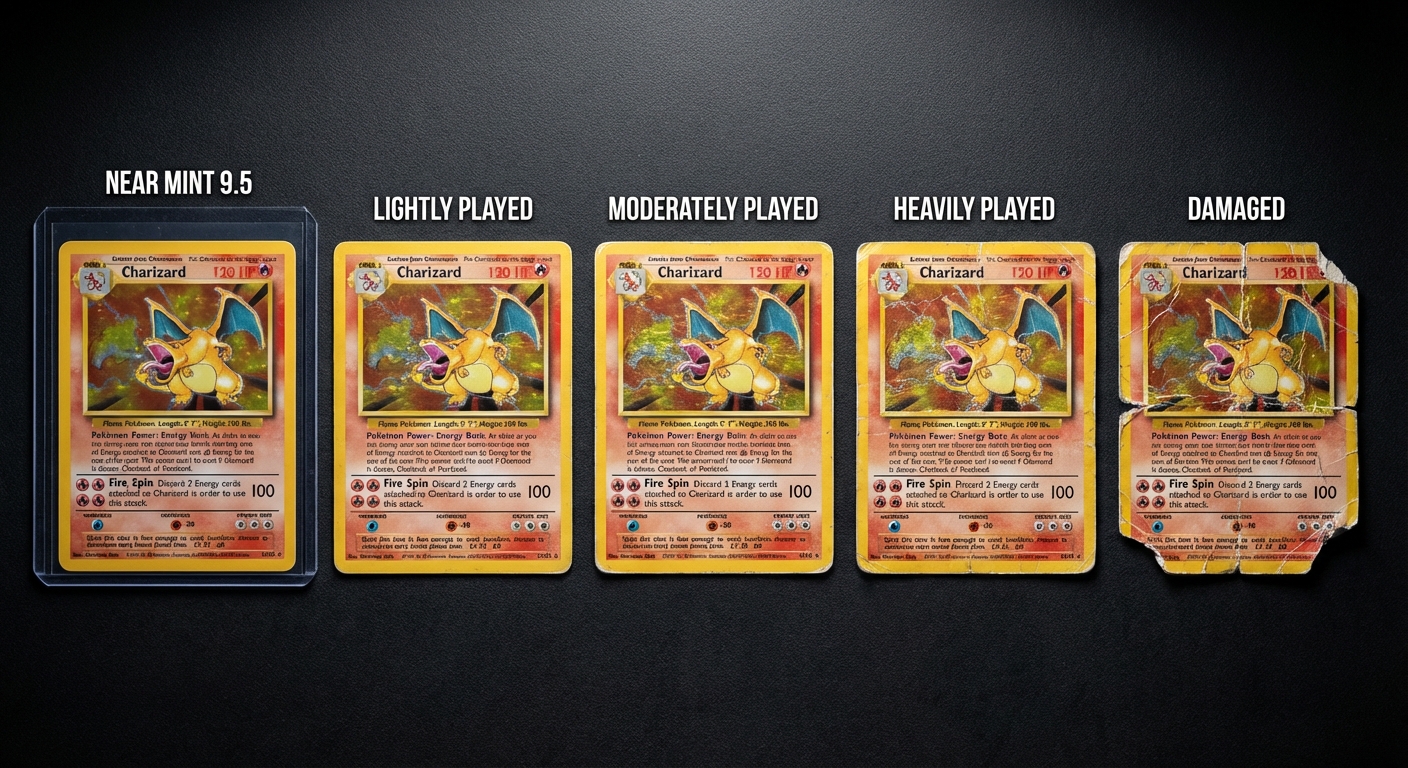
An estimated $50 million in counterfeit Pokemon cards circulated through online marketplaces in 2025. Some fakes are so convincing they've fooled experienced collectors.
The Evolution of Pokemon Card Counterfeits
First-generation fakes were laughably obvious. Wrong colors, blurry text, cards that felt like cardboard from a cereal box. These counterfeits targeted children who didn't know better, sold at swap meets and corner stores for a dollar a pack.
Modern counterfeits are a different threat entirely. Counterfeiters now use high-resolution scans, professional printing equipment, and even attempt to replicate the texture and weight of authentic cards. Some operations produce fakes so convincing that they've been purchased by dealers, listed on major marketplaces, and even submitted to grading companies.
The most commonly counterfeited cards are predictable: Base Set Charizard, First Edition stamps, vintage holos, and modern chase cards like Alt Arts. If a card commands a premium, someone is trying to fake it. Your defense is knowledge—understanding the telltale signs that separate authentic cards from even the best reproductions.
The Light Test
The light test is your first line of defense and catches the majority of counterfeits. Authentic Pokemon cards have a specific opacity due to their layered construction—a black core layer sandwiched between two printed layers.
How To Perform
Hold the card up to a bright light source (phone flashlight works well). An authentic Pokemon card will show a faint, even glow. Light passes through, but the card isn't transparent. You shouldn't be able to read text or see the back image clearly.
Fake Indicators
- ✗Too much light passes through—card appears nearly transparent
- ✗No light passes through—card is completely opaque
- ✗Uneven light distribution—some areas glow more than others
- ✗Back image or text visible through the card
Important Note
Vintage cards (1999-2003) may have slightly different light transmission than modern cards due to different card stock. Compare against known authentic cards from the same era.
Texture and Feel Analysis
Authentic Pokemon cards have a distinctive texture that's difficult to replicate. The surface isn't smooth—it has a subtle, consistent pattern that experienced collectors can feel instantly.
Front Texture
Run your finger across the card front. Authentic cards have a slight texture, almost like very fine linen. The holofoil area on holographic cards feels different from the non-holo portions. Fakes often feel too smooth, too rough, or have an inconsistent texture across the surface.
Back Texture
The card back should have the same subtle texture. Pay attention to the blue areas—authentic cards have a specific feel. Many counterfeits have backs that feel plasticky, waxy, or completely smooth.
Weight and Thickness
Pokemon cards have a consistent weight and thickness. A digital scale that measures to 0.01g can detect fakes—authentic cards weigh approximately 1.7-1.8 grams. Thickness should be around 0.31-0.32mm. Significant deviation suggests a counterfeit.
The Bend Test
Gently bend the card (don't crease it). Authentic cards have a specific flexibility and spring back cleanly. Fakes often feel too stiff, too flimsy, or don't return to flat. This test requires experience with authentic cards to calibrate your expectations.
Print Quality Analysis
Counterfeiters can match colors and images, but printing quality tells the real story. Examine cards under magnification to catch printing flaws invisible to the naked eye.
Rosette Pattern
Authentic Pokemon cards are printed using a specific rosette pattern—a series of overlapping dots that create the illusion of solid colors. Under 10x magnification, you should see clean, consistent rosettes. Fakes often show different dot patterns, blurry printing, or solid color areas where rosettes should appear.
Text Clarity
Examine the card text under magnification. Authentic cards have crisp, clean text with consistent thickness. Look at small text like copyright information and set symbols. Fakes often have fuzzy text edges, inconsistent line weights, or slightly incorrect fonts.
Border Quality
Yellow borders should be consistent and clean. Look for color bleeding, uneven edges, or borders that are too thick or thin. The border should have a subtle texture, not appear flat or plastic.
Holographic Pattern
Holographic cards have specific patterns that are extremely difficult to replicate. Cosmos holos, galaxy holos, and other patterns should match reference cards exactly. Fakes often have incorrect holo patterns, wrong colors in the holographic effect, or patterns that don't align with the card artwork correctly.
Specific Details to Check
Beyond general quality, specific details separate authentic cards from counterfeits. These require reference images of known authentic cards.
Set Symbol
Each set has a specific symbol with exact dimensions, colors, and placement. Compare against reference images. Fakes often have symbols that are slightly wrong in size, color saturation, or position.
Copyright Text
The copyright line at the bottom varies by year and region. Verify it matches the card's supposed origin. Many fakes have incorrect or anachronistic copyright text.
Card Back
The Pokemon card back has been consistent since 1996 but has subtle variations by era. The blue color, Pokeball position, and overall saturation should match era-appropriate reference cards.
First Edition Stamp
First Edition stamps are heavily counterfeited. The stamp should be crisp, correctly positioned, and have the right shade of black. Examine under magnification—fake stamps often have fuzzy edges or incorrect thickness.
The Rip Test (Destructive)
The definitive authentication method destroys the card, so it's only used when other methods are inconclusive and the card's value justifies the risk. Authentic Pokemon cards have a black layer in the center when torn—this is the core that provides structure and opacity.
Warning
Authentic Card
Authentic cards show: white outer layers, distinct black center layer, clean separation of layers.
Fake Card
Fake cards show: no black layer, single-color core, layers that don't separate cleanly, or completely different internal structure.
Most Commonly Counterfeited Cards
Certain cards attract counterfeiters due to their high value. Be especially vigilant with these:
- !Base Set Charizard (both Unlimited and First Edition)
- !Any First Edition vintage holos
- !Shining and Gold Star cards
- !Crystal Type Pokemon
- !Modern Alt Art cards (Umbreon VMAX, Charizard VMAX, etc.)
- !Promo cards (Ancient Mew, promotional holos)
- !Japanese exclusive cards sold as English
Safe Buying Practices
Prevention beats detection. These practices minimize your exposure to counterfeits.
- —Buy from reputable sellers with extensive feedback history
- —Request multiple high-resolution photos including edges and corners
- —Ask for photos under specific conditions (light test, close-ups)
- —Use buyer protection (PayPal Goods & Services, eBay Money Back Guarantee)
- —Be suspicious of prices significantly below market value
- —Verify graded cards on PSA, BGS, or CGC verification portals
- —Consider paying premiums for cards from established dealers
- —Meet locally for high-value purchases when possible—inspect before paying
Counterfeit Graded Cards
Unfortunately, counterfeiters also fake graded cards. This includes fake slabs with real cards, fake slabs with fake cards, and altered labels on authentic slabs.
Verification Steps
Always verify graded cards using the certification number on the grading company's website. PSA cards can be verified at PSAcard.com/cert. BGS at Beckett.com/grading/card-lookup. CGC at CGCcards.com/certlookup.
Slab Warning Signs
- ✗Label doesn't match online database information
- ✗Slab feels wrong weight or has visual imperfections
- ✗QR code links to wrong card or doesn't work
- ✗Certification number returns no results
- ✗Card inside slab doesn't match label description
Frequently Asked Questions
Can fake cards pass PSA grading?
Theoretically no, but mistakes happen. PSA, BGS, and CGC have caught counterfeits post-encapsulation and issued refunds. Always verify graded cards independently, especially for high-value purchases.
Are Japanese fake cards common?
Yes, Japanese cards are heavily counterfeited, especially vintage sets and modern high-value cards. Apply the same authentication tests—the light test and print quality analysis work regardless of language.
What should I do if I bought a fake?
Document everything with photos and videos. Contact the seller for a refund. If they refuse, escalate through the platform (eBay, TCGPlayer) or payment processor (PayPal). Report the seller to prevent future victims.
Are proxy cards the same as counterfeits?
Proxies are cards printed for playtesting, clearly marked as not authentic. Counterfeits are designed to deceive. Selling proxies as real cards is fraud, but owning proxies for personal use is legal.
Verify Card Values
Check current market prices to ensure you're paying fair value. If a price seems too good for the card's condition, authentication is essential.
Check Card Prices→